JourneyOnline.org

Are You a Follower of Christ Because You Were Born into a Christian Family?

Maybe you were raised in a home where Jesus was known and loved. You have prayed since you could speak, and church is not a foreign place to you. Or maybe church was rare, but Christian is simply what your family is, and so it is what you have always been.

And maybe underneath it there is a question you have not said out loud. Why does this seem alive for other people and inherited for you?

The answer to the title question is no. Being born into a Christian family is not what makes anyone a follower of Christ.

Please read that as gently as it is meant. Nothing in it is a verdict on your family, and nothing in it says that what you were given was worthless. It describes how a person comes to belong to God, and the answer is the same for everyone, everywhere, whatever they grew up inside.

What Your Family Gave You Matters

Before anything else, it is worth saying that your parents were doing something God asked them to do.

The Bible was written by many people across many centuries, all of them carried along by God, and together their writings form one trustworthy Word from him. In one of its oldest sections, God gives instructions to parents about their children.

“And these words that I command you today shall be on your heart. You shall teach them diligently to your children, and shall talk of them when you sit in your house, and when you walk by the way, and when you lie down, and when you rise.”

Deuteronomy 6:6-7, ESV

A child raised that way receives something valuable. You know the story. You heard early that God is good. Prayer was normal in your house. You watched people who love Jesus up close. Many people spend years of adult life searching for what was simply in the air of your childhood.

Perhaps your home lived this faithfully. Perhaps what you saw did not always match what was taught. Either way, there is one thing no home, faithful or failing, was ever able to hand you. Your parents could teach you about God. They could not trust him for you.

If your parents taught you faithfully and you do not yet have a faith of your own, they did not fail. Nobody has ever handed saving faith to another person, because it cannot be done.

No One Inherits a Standing Before God

The Bible is direct about how a person becomes part of God’s family.

“But to all who did receive him, who believed in his name, he gave the right to become children of God, who were born, not of blood nor of the will of the flesh nor of the will of man, but of God.”

John 1:12-13, ESV

Notice what is ruled out. Born “not of blood” means not by family line. “Not of the will of the flesh nor of the will of man” means not by human effort or human decision, including decisions other people made on your behalf. Then look at what is left standing: receiving Jesus and trusting him personally, with the new life itself given by God, one person at a time.

The Old Testament said the same thing long before. Speaking through the prophet Ezekiel, God told a generation that was blaming its parents for its condition that guilt does not travel down a family line. Each person stands before God on their own account (Ezekiel 18:20). Ezekiel was not teaching that a person can earn a standing before God by living well. He was saying that nobody can stand behind someone else’s life, good or bad.

Jesus’s own family is the clearest case there has ever been. His brothers grew up in the same house as the sinless Son of God, and during his ministry they did not believe in him (John 7:5). If closeness could make a believer, they would have been the first believers on earth. Later one of them, James, did come to trust him and became a leader of the church in Jerusalem. Growing up beside Jesus made no one a believer, and it kept no one from becoming one.

This is also why the question matters far beyond Christian homes. Almost everywhere in the world, faith arrives first as family identity. Growing up inside something is how nearly everyone begins. Belonging to God works differently.

Nothing here will tell you where your parents or grandparents stand with God. Nobody can read another person’s heart. That is between them and him.

Jesus Said This to a Deeply Religious Man

One night a man named Nicodemus came to Jesus. He was a religious leader in Israel, a member of the ruling council, trained in the scriptures and respected for it. If a person could have claimed a place with God on the strength of heritage and religious standing, it was this man.

“Jesus answered him, “Truly, truly, I say to you, unless one is born again he cannot see the kingdom of God.” Nicodemus said to him, “How can a man be born when he is old? Can he enter a second time into his mother’s womb and be born?” Jesus answered, “Truly, truly, I say to you, unless one is born of water and the Spirit, he cannot enter the kingdom of God. That which is born of the flesh is flesh, and that which is born of the Spirit is spirit. Do not marvel that I said to you, ‘You must be born again.’””

John 3:3-7, ESV

Nicodemus did not need to become more religious. He already was. Information was not his problem either, since he taught it for a living. What Jesus told him was that unless he was born a second time he could not see the kingdom of God, which means life under God’s rule, belonging to him. And this second birth is something God does rather than something a person arranges.

The one who does it is named: born of the Spirit. The Holy Spirit is God himself, the third person of the one God alongside the Father and the Son, and he is the one who gives this new life. Whatever else Jesus meant by water, the weight of his answer falls on the Spirit: the new birth is a cleansing, inward work of God, and no outward act performs it. No one can produce it in themselves, and no parent can produce it in a child.

If Jesus said this to Nicodemus, then it is not aimed at you or your family in particular. It is the same for everyone.

Jesus went on to tell Nicodemus why God gives this second birth. God the Father loved the world so much that he gave his only Son, so that everyone who believes in him will not perish but will have eternal life (John 3:16). The offer made to Nicodemus that night is the same offer made to you.

You can know every word of the story and still need this. The people who taught you the story told it to you hoping you would.

How a Person Enters God’s Family

There is a reason a second birth is necessary.

Every person, without exception, has sinned. This means more than making mistakes. It means turning away from God and living by our own direction instead of his. It is true of people raised in Christian homes and of people raised with no religion at all. Sin is a moral debt before a holy God, and it carries two consequences: physical death, and spiritual death, which is separation from God that continues beyond this life.

Jesus is God the Son, fully God and fully human. He lived without sin, and he went to the cross. There he took the penalty our sin deserved, dying in our place and paying a debt we could never pay ourselves. You can read more about that in Why Did Jesus Die?

Then he rose from the dead bodily. The tomb was empty. His resurrection is a historical event, and it shows that the payment was accepted and that death itself has been defeated.

“For by grace you have been saved through faith. And this is not your own doing; it is the gift of God, not a result of works, so that no one may boast.”

Ephesians 2:8-9, ESV

That includes the quiet boast of where you come from. No one will stand before God on a family name.

Faith means trusting Jesus personally, putting the weight of your life on him and on what he did, rather than on anything you have achieved or anyone you came from. Agreeing that the facts are true is a beginning, but a person can agree for decades and never actually trust.

Jesus said that he is the way, the truth, and the life, and that no one comes to the Father except through him (John 14:6). There is no other route to God, and there is no route that runs through somebody else’s faith. More on that in Is Belief in Jesus the Only Way to Heaven?

When a person trusts Christ, God begins changing the direction of their life by his Spirit. Turning from sin grows out of genuine faith as its fruit. None of that is paying him back for the gift, because the gift was never for sale. Receiving it is the start of a life of following Jesus, not a transaction completed and filed away.

Those who never trust him remain separated from God, and that separation lasts. Scripture does not soften this, and neither will we, because an offer of rescue means little if there is nothing to be rescued from.

For some readers, deciding this personally is not a small thing. In many families and communities, faith is shared identity, and stepping into a faith of your own can cost you something at home. Jesus never hid that this happens to people. If that is your situation, you are not being asked to pretend the cost is small. You are being invited by someone who knows exactly what he is asking of you.

Making It Your Own

If you want to trust Jesus for yourself, you can tell him so right now. You can use your own words or these.

Jesus, I have heard about you. Some of what I know came to me from other people. Today I want to trust you myself.

I have sinned and I need your forgiveness. I am truly sorry for the wrong I have done. I believe you are God the Son. I believe you died in my place and rose again from the dead.

I am not bringing you anything I have done, or anything my family has done. I am asking you to give me the new life you spoke about, and to make me a child of God. I turn from my old direction and I give you my life. From today I want to follow you.

Thank you for hearing me. Amen.

If you prayed that and meant it, here is what is true.

You spoke to Jesus, and the Father heard, because the Son and the Father are one God. He promised, in his own Word, that everyone who calls on him will be saved, and he always keeps his promise.

“For everyone who calls on the name of the Lord will be saved.”

Romans 10:13, ESV

Your assurance does not rest on how strongly you felt while praying, or on whether you said the words perfectly. It rests on Christ, who finished the work, and on the Father, who keeps his word.

You are a child of God now, and it happened the way John described it. By God’s own doing, rather than by family line or by anyone’s decision but his. What your family gave you was a gift. This is his.

The Holy Spirit now lives in you, and he will begin changing you from the inside over the days and years ahead.

Frequently Asked Questions

Are you saying my family’s faith isn’t real?

No, and nothing here says that. Where the people who raised you stand with God is between them and him, and no article can read another person’s heart. The point is only that their faith cannot be transferred to you, in the same way that yours could not be transferred to a child of your own.

I was baptized as a baby. Doesn’t that count for something?

Baptism matters, and Christians hold different convictions about when and how it is practiced. What no ceremony can do is stand in place of personal trust in Jesus. If you were baptized as an infant, that was an act of love by people who wanted you to belong to God. Whether you now trust him yourself is a separate question, and only you can answer it.

I’ve believed as long as I can remember. Does that mean my faith isn’t real?

No. Some people trust Jesus so early that they cannot point to a date, and that faith is as genuine as anyone’s. This article is not designed to make a trusting person doubt. If you are relying on Jesus and what he did, you have what matters, and nothing here asks you to doubt it. If you want, you can tell him again, in your own words, that you are his.

Isn’t it enough that I try to live a good life?

No, and this is what makes the Gospel different from every attempt to earn a place with God. Paul, who wrote much of the New Testament, had a flawless religious record by the standards of his people, and he later described all of it as a loss compared with knowing Christ (Philippians 3:4-9). A good life is a good thing, but it cannot clear a moral debt owed to God. Only Jesus does that, and he offers it as a gift. See What Does it Mean that Jesus Can Forgive You of Your Sins?

What if trusting Jesus for myself would cause problems in my family?

For many people this is a real possibility, and it deserves an honest answer. Nothing requires you to announce a decision immediately, and there is no shame in taking time to think and pray about what to say and to whom. If you trust Jesus, your standing with him does not depend on whether you tell anyone, or when. If this is your situation, you can write to us and someone will respond personally.

If I was already praying and going to church, what actually changes?

The basis changes. Praying and attending are good, and you may well keep doing both. What is different is what you are resting on. Instead of a life shaped around belief, there is now personal trust in Jesus underneath it. Over time the Holy Spirit works that difference outward, but the change begins underneath, with what you are relying on.

Continue Exploring

Steps to Peace with God

The Jesus Path, for taking your first steps with him

Who Is Jesus homepage

Did you make your faith your own today, for the first time? Or is there a question still sitting with you? We would love to hear from you either way, and a real person will respond.

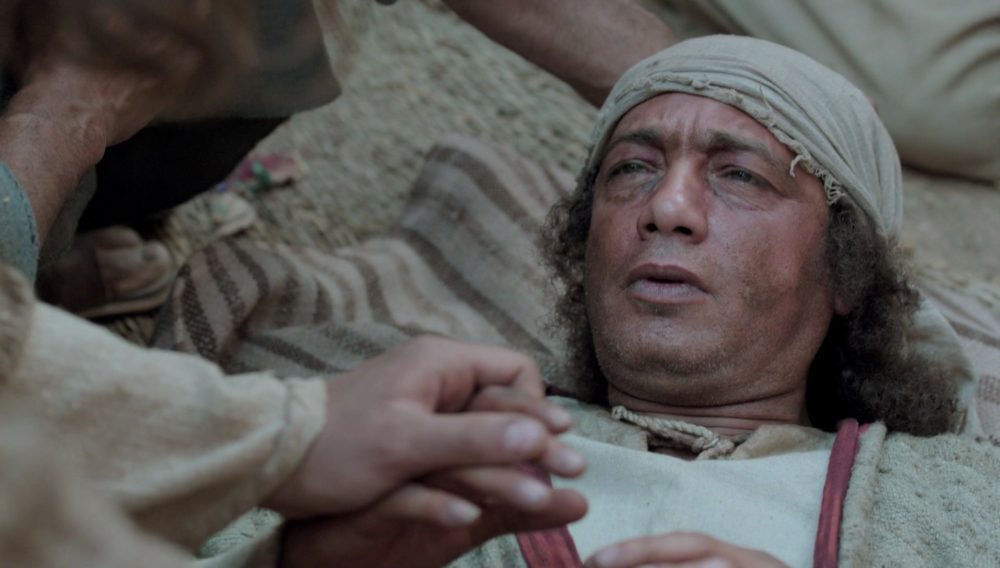
Can Jesus liberate us from the things of this world?

Have you ever noticed that something you once chose seems to have started choosing for you? You may know exactly what has a hold on you. You may not feel trapped by anything at all. Or you may have been taught another way of becoming free, and want to know whether Jesus offers the same thing.

Wherever you are starting from, the question deserves an honest answer, and the answer is yes. But we have to be clear about what needs liberating. Jesus does not free us by teaching us to escape the world God made. He frees us from sin, and from the hold we have allowed good things to gain on us.

What Does Jesus Liberate Us From?

When the Bible speaks of the world as something we need to be freed from, it does not mean the earth God made or the good things in it. It means a way of living that is set against God, and the hold it has on us.

So none of this is the problem: money, work, reputation, comfort, food and drink. Every one of those is good or harmless in itself. God made a world full of things worth wanting, and he did not make them as traps.

The trouble lies somewhere else. Our wanting turns into needing, and our needing turns into serving. A person can spend thirty years working for money they never enjoy, or arranging a whole life around what other people will think, and never once decide to live that way. It happens the way a current carries a swimmer. The swimmer believes they are choosing their direction, and all the while it is the water that decides.

What would you find hardest to lose? Whatever your answer, it leads to a harder question than the one in the title. Why can we not seem to hold any of it freely?

Why We Are Not as Free as We Think

Jesus once had an argument about freedom with people who were sure the subject did not apply to them. They were speaking with him face to face, and their family line went back to Abraham himself, the man God had made his promises to centuries before. It was a genuine and honorable heritage. When Jesus spoke about becoming free, they were not being foolish or evasive. They were telling the truth as they understood it.

“They answered him, ‘We are offspring of Abraham and have never been enslaved to anyone. How is it that you say, “You will become free”?’”

John 8:33, ESV

If you have been reading this far and thinking that you are not enslaved to anything, you are in good company, and you have just made the same objection they did.

Jesus does not soften his answer.

“Jesus answered them, ‘Truly, truly, I say to you, everyone who practices sin is a slave to sin.’”

John 8:34, ESV

Notice what he does not say. He does not say that some people are slaves, or that the poor are, or that the greedy are. He says everyone who practices sin, which is everyone, including the people standing in front of him and including you and me.

Look at what he names as the master. Not money. Not the world. Sin. Sin is not a small word for making mistakes. It is the moral wrong we have done against a holy God, and against the people he made. Every one of us has done it, and doing it has put us under a master we did not choose and cannot escape by trying harder.

And sin does something worse than bind us. It separates us from God, who made us for himself, and that separation is the deepest trouble a person can be in.

This is why the answer to bondage is never a technique. A man who owes far more than he could earn in a lifetime will not clear the debt by promising to manage better. Being careful from now on cannot touch the debt itself. Someone has to pay it. The wrong we have done is like that. It is not a habit to be broken. It is a debt to be paid, and we cannot pay it.

God Made This World and Called It Good

There is a mistake at this point that has done a great deal of harm, and it would send you looking for freedom in exactly the wrong place.

The physical world is not the enemy. Bodies are not the enemy. Money, food, work, marriage, beauty, and pleasure are not the enemy. God made all of it, and he made it good.

None of it is still as he made it. When people turned away from God, the damage did not stay contained in us. It ran out into everything, so that the world we live in now is a good world that has been spoiled: bodies that fail and die, work that exhausts, love that wounds, beauty that does not last. It is the spoiling that needs undoing, and God’s answer to a spoiled world has never been to discard it.

Long after the world had gone wrong, the Bible still said this:

“For everything created by God is good, and nothing is to be rejected if it is received with thanksgiving.”

1 Timothy 4:4, ESV

Those words were written to correct people who had begun teaching that holiness meant refusing good things. They were sincere, and they were wrong.

Jesus himself settles the matter, and he is not a second God alongside the Father. He is God the Son, fully God and fully human, and he did not rescue us by staying clear of physical life. He entered it. He was born with a body, he ate and drank and grew tired, he died a physical death, and he rose again in a body that could be touched.

And what God has promised at the end is not an escape from the world but a renewed one, with God himself coming down to live among his people. We have written more about that in Does Jesus Give You Life After Death?

So freedom does not mean having less of the world. It means being able to receive the world as a gift again, from the hand of God who made it, rather than serving it as a master.

The Son Sets You Free

Return to the argument in John 8, because Jesus does not leave his hearers with the diagnosis. He gives them the cure in the same breath.

“The slave does not remain in the house forever; the son remains forever. So if the Son sets you free, you will be free indeed.”

John 8:35-36, ESV

In the household Jesus describes, a slave has no permanent place while a son belongs there for good. Jesus is not offering the slave better treatment. He is offering you a son’s place in the household, permanent.

Notice who acts in that last sentence. The Son sets you free. You do not set yourself free.

Some of you have made the same promise more times than you would like to count: “This is the last time.” You may have hidden it, or hated what it was doing to you, or wondered whether you are simply too weak to change. Others of you have never made that promise about anything, and the whole subject feels distant. Jesus does not wait for either of you to prove you can free yourselves. Here is how he did it, and why.

God the Father did not have to open a way at all. He opened one because he loved the people who had turned away from him. The Father sent his Son, and the Son went willingly, and the two acted as one, because the Father and the Son are one God.

Jesus lived the life we have failed to live, without sin. Then he went to the cross, the wooden structure the Romans used to execute criminals, and he died there in our place, taking on himself the penalty our sin deserved.

His death was an act of love, and it was more than an example of one. It was a payment, made in our name, for a debt we owed and could not cover.

Three days later he rose from the dead, in a body, and by rising he broke the power of the thing that held us.

Because that debt is paid, the hold on everyone who trusts him is broken. Not loosened. Broken. And because it was Jesus who paid it, there is no second place to go for the same thing. He is not one liberator among several. He is the only one who has ever paid for anyone.

How Can You Receive This Freedom?

This freedom is received, not achieved. You do not clean yourself up so that Jesus will accept you. You come to him because you cannot rescue yourself.

Trusting him means resting your hope on what he has already done, instead of on what you can manage. It means handing him the direction of your life. That is the whole of what he asks. Trust is the open hand that receives what he paid everything to give.

The freedom he gives is not only for this life. Those who trust him are with God forever. Those who refuse him stay separated from God, and that separation is what Jesus came to save us from.

If you would like to read more about why his death was necessary, see Why Did Jesus Die?

What Freedom Looks Like Now

An honest answer has to include when. Otherwise a person trusts Jesus, finds themselves still struggling next week, and concludes that nothing happened. The Bible was written by many people across many centuries, carried along by God, and it speaks with one voice. Paul was one of those writers. He wrote much of the New Testament to the earliest groups of believers, and he described what has changed and what is still changing:

“We know that our old self was crucified with him in order that the body of sin might be brought to nothing, so that we would no longer be enslaved to sin. For one who has died has been set free from sin.”

Romans 6:6-7, ESV

There are three things sin does to a person, and Jesus deals with all three, though not all on the same timetable.

Sin’s penalty is settled now, and completely. The moment a person trusts Jesus, the debt is paid and the record is clear. Nothing is pending. Nothing is partial.

Sin’s rule is broken now, and its pull weakens over time. Sin is no longer the master, and that changes the day a person trusts Jesus. What takes time is the wearing down of what sin left behind, the habits and the wanting. From the first day, the Holy Spirit, who is God himself, lives in the person who has trusted Jesus, and the wearing down is his work. No one does this to themselves. He changes what a person wants, over months and years, and he begins at once.

Sin’s presence is gone in the end. There will be a day with no pull left in it at all. That day is coming and it has not come yet, which is why the honest word for now is progress rather than perfection.

This freedom is real even when circumstances do not change. Paul himself wrote some of his most joyful letters from a Roman prison, in chains and free at the same time.

A person who has been set free does say no to things, and does turn away from the wrong they once served, toward the God who freed them. But the saying no is not what made them free. They say no because they are free, not in order to become free. The self-denial is the fruit of the gift, never the price of it.

Coming to Jesus for Freedom

Perhaps you have read this far and you are not sure yet. That is an honest place to stand, and you do not have to pretend otherwise before you can speak to God. You can ask him to show you what is true, and to show you what has a hold on you. If that is where you are, you might pray something like this:

A prayer for the one who is still looking

God, I do not know yet whether all of this is true. Show me what has a hold on me, and show me whether Jesus is who he says he is. I am willing to see. Amen.

God the Father is not offended by that prayer. When a person asks him honestly for the truth, he leads them to his Son.

Or perhaps something in you has settled while you were reading, and you are ready to stop trying to get free and to be set free. You do not need religious words or a religious background. Come with your own words, and bring him your trust.

A prayer to trust Jesus

Jesus, I believe that you are God the Son, that you died in my place, and that God raised you from the dead. I have sinned and I need your forgiveness. I am truly sorry for the wrong I have done. I have been serving things that were never meant to be my master, and I cannot free myself. Thank you for paying what I owed. I trust you now as my Savior, the one who has rescued me. Set me free, and lead me. I want to follow you. Amen.

If that prayer is your trust in Jesus, here is what God has promised:

“For everyone who calls on the name of the Lord will be saved.”

Romans 10:13, ESV

The Father heard you. You spoke to Jesus, and the Father heard, because the Son and the Father are one God. He made that promise in his own Word, and he always keeps his promise.

Your assurance does not rest on how strongly you felt while you prayed, or on whether you said the words perfectly, or on anything you will manage to do next. It rests on what Jesus has already done, and on the character of the God who does not break his word. You are forgiven. The Holy Spirit now lives in you, and he will begin the long, patient work of wearing down what still has a hold on you. None of that is paying God back, because the gift was never for sale.

Frequently Asked Questions

I don’t feel like a slave to anything. Is this article even for me?

Yes, and you are not the first person to say so. The people arguing with Jesus in John 8 said exactly that, and they meant it sincerely. His answer was that everyone who sins is a slave to sin, which makes this less about how trapped a person feels and more about what is true of all of us. Bondage is not always painful. Sometimes it is comfortable, which is what makes it hard to see.

Doesn’t the Bible say not to love the world? Isn’t that saying the world is bad?

It says not to love the world, and it means something specific by the word. In that passage the world means the whole way of living that is organized against God, along with the desires that keep us tied to it. It does not mean the earth, or your body, or your family, or your work. The same Bible says that everything God created is good and that nothing should be refused if it is received with thanks. Both statements are true because they are talking about two different things.

Do I have to give up everything I own to be free?

Giving things up does not make anyone free. A person can give away everything they own and still be ruled by what other people think of them for doing it, so the answer is no. Freedom is given by Jesus, not earned by going without. Once a person is free, they will find that their grip on some things loosens and that they can let them go more easily than before. That letting go is a result of being free, never the way to become free.

Isn’t this just one path to freedom among many?

No, and the reason is not that other paths are less sincere. It is that the problem is a debt, and only one person has ever paid it. Jesus lived without sin and died in the place of people who had sinned, and no one else has done that or could. Sincere effort in any direction leaves the debt exactly where it was. You can read more about why there is one way in Is Belief in Jesus the Only Way to Heaven?

What if I can’t stop, no matter how hard I try?

Then you are describing something real, and trying harder on your own is not the answer. Jesus gives freedom, and he gives his Spirit, and he also gives people who can walk with you, support you, and help you take practical steps. Needing help is not a failure of faith, and faith does not make help unnecessary. Use the buttons below and we will connect with you. If you would like to talk with someone trained for this, Find A Helpline lists free support services in most countries at findahelpline.com, including help for substance use, gambling, and other struggles that will not let go.

I trusted Jesus, but I’m still struggling with the same thing. Did it not work?

It worked. Your forgiveness was complete the moment you trusted him, and nothing about your struggle this week puts it in doubt. Sin is no longer your master. What is still being worn down is what it left behind, and that is the Holy Spirit’s work in you over time rather than a switch that was supposed to flip. Struggle is what it feels like when the Holy Spirit pulls back against what once had the run of the house.

Continue Exploring

Steps to Peace with God: https://journeyonline.org/steps-peace-god/

The Jesus Path, for taking your first steps with him: https://journeyonline.org/get-started/

Who Is Jesus homepage: https://whojesusis.com


Whatever brought you to this page, we would be glad to hear from you. If you prayed to trust Jesus, if you still have questions, or if you would like someone to pray for you, please reach out using the buttons below. There is no pressure and no judgment here, only people who would be glad to walk alongside you.

Why Do Those Who Follow Jesus Suffer in this Life?

Perhaps you are suffering right now. Perhaps you are watching someone you love suffer, and you do not know how to help. Or perhaps suffering is the reason you have never been able to believe, because it seems to you that a good God would never allow what you have seen.

This article is for all three of you. The Bible’s answer to the question is stranger and better than a tidy one: a God who stepped into suffering himself.

One note before we begin. If you already trust Jesus and you came here hurting, the part of this article written most directly for you comes after the prayer, near the end. It is worth the journey.

Jesus Said Trouble Would Come

Jesus saw it coming. On the night before he died, he gathered his closest friends and told them the truth about the life ahead of them.

“I have said these things to you, that in me you may have peace. In the world you will have tribulation. But take heart; I have overcome the world.”

John 16:33, ESV

Read the middle sentence again. In the world you will have tribulation. Jesus said this to the people who loved him most, and he offered them no exemption. He promised them his peace and he promised them trouble in a single sentence, and he has kept both promises. His followers in every generation have met the trouble, and in the middle of it he has kept offering the peace.

So a follower of Jesus who is suffering has not wandered off the map. Jesus drew the map with trouble on it. Some voices teach that faith brings health, wealth, and a smooth road, and that pain in your life means something is wrong with your faith. Jesus taught the opposite, in plain words, on the most solemn night of his life. Any promise of a suffering-free life is a promise he never made.

At the bottom of this page there is a button that reads I Need Prayer. If you are carrying more than you can hold today, you do not have to finish this article first. Press it, and a person on our team will pray for you and reply.

Where Suffering Came From

The Bible’s answer starts earlier than most people expect, at the beginning of everything. God made the world, and everything he made was good. Bodies were good. Work was good. Food, friendship, rest, sunlight: God looked at all he had made and called it very good.

None of it is still as he made it. When people turned away from God, the damage ran out into everything, so that the world we live in now is a good world that has been spoiled: bodies that fail, work that exhausts, love that wounds, people who wound each other, beauty that does not last. Suffering lives in the spoiling. It entered through rebellion against God, and the damage has never stopped spreading.

Human rebellion is only part of the story. The Bible says a spiritual being called Satan rebelled against God before people did, and drew others with him, and their influence still stirs evil and suffering in this world. God made every spiritual being good, and evil began in a creature’s choice, never in him. Every rebel power now stands under the authority of Jesus, who came, in the Bible’s own words, “to destroy the works of the devil” (1 John 3:8, ESV).

One of the Bible’s writers described the world this way:

“For we know that the whole creation has been groaning together in the pains of childbirth until now.”

Romans 8:22, ESV

Groaning in the pains of childbirth. The picture is pain that is deep and present, and yet points forward, pain that ends in something being born. We will come back to that. For now, hold on to both halves of the truth: the world is good, because God made it, and the world is spoiled, because we turned. Your suffering belongs to the spoiling. It is one more thing that is not the way it was made to be.

We wrote more about this spoiled world, and about how Jesus sets people free within it, in Can Jesus Liberate Us from the Things of This World?.

What God Does Not Tell Us

Here we must be honest with you about what we cannot tell you, because the Bible is honest about it first.

Scripture explains where suffering came from. It declares what God has done about suffering and what he will do to end it. What scripture does not give is the reason for your particular suffering, and neither will we. The Bible never hands out private explanations, and it reserves some of its sharpest words for people who do.

The Bible contains an entire book about this. A man named Job lost his children, his health, and everything he owned, and three friends came to explain his suffering to him. They were certain it had a reason, and certain they knew what it was. When God finally spoke at the end of the book, the friends were the ones he rebuked, for speaking wrongly about him. Job himself was never told why. He was given something greater than a reason: God himself, present and speaking.

The Bible also refuses the opposite certainty, that suffering arrives as punishment matched to your sins. When Jesus met a man blind from birth and was asked whose sin had caused it, his or his parents’, Jesus answered that it was neither (John 9:2-3).

So be gentle with the question of why, and be wary of anyone who claims to read God’s purposes in your pain, even when the voice is kind, and even when the voice is your own. Job’s friends meant well too.

Some Suffering Comes Because You Follow Jesus

There is one kind of suffering the Bible does explain plainly: the kind named in this article’s title. Some suffering comes to a person precisely because they follow Jesus. He said this too, on the same night:

“If the world hates you, know that it has hated me before it hated you. If you were of the world, the world would love you as its own; but because you are not of the world, but I chose you out of the world, therefore the world hates you. Remember the word that I said to you: ‘A servant is not greater than his master.’ If they persecuted me, they will also persecute you. If they kept my word, they will also keep yours.”

John 15:18-20, ESV

When Jesus speaks of the world here, he means humanity organized in rebellion against God, the same rebellion that spoiled creation. People who belong to Jesus step out of that rebellion, and the rebellion notices. Across the centuries, and in many places today, following Jesus has cost people their reputation, their work, their family, and sometimes their life. Yet Jesus placed a quiet hope inside the warning: some will keep his word too. Some who watch a follower suffer become followers themselves.

If this is your situation, or could become your situation, we will not tell you from a distance what to do, whom to tell, or when. Those decisions belong to you, made with God’s help, in God’s timing, and silence chosen for safety is not a failure of faith. What we can say is that Jesus sees, and that a servant is not greater than the master who was hated first. If you would like to write to someone about it, the I Have a Question button at the bottom of this page sends us a message, and a person on our team will write back to you.

What Jesus Did About a Spoiled World

Everything to this point has been diagnosis. Now comes what God did about it. God entered the suffering, in the person of the Son.

Jesus is God the Son, fully God and fully human. The eternal Son took on a human body and a human life with everything that includes. He knew hunger and weariness. He wept at the grave of a friend. He was betrayed by someone he loved, abandoned by his friends, and executed unjustly. Whatever suffering means, Jesus knows it from the inside.

Then he did what he had come to do. He went to the cross, the wooden structure the Romans used to execute criminals, and he suffered there on purpose, for us.

“For Christ also suffered once for sins, the righteous for the unrighteous, that he might bring us to God, being put to death in the flesh but made alive in the spirit.”

1 Peter 3:18, ESV

The righteous for the unrighteous. That is the heart of it. Every person has sinned. Every person has joined, in their own way, the turn away from God that spoiled the world. Sin carries a penalty, because God is just and sin cannot be waved away. The penalty is death, and a separation from God that lasts beyond death, forever, unless it is healed. On the cross, Jesus stood in the place of sinners and paid that penalty himself. The Father sent his Son, and the Son went willingly, and the two acted as one, because the Father and the Son are one God.

Why would God do that? The Bible answers plainly:

“But God shows his love for us in that while we were still sinners, Christ died for us.”

Romans 5:8, ESV

Love that did more than feel for us from a distance. Love that walked into the spoiled world and took the worst it could do. We explain the cross more fully in Why Did Jesus Die?.

On the third day, the Father raised Jesus from the dead, bodily. The tomb was empty. His followers saw him, touched him, ate with him. The resurrection is a fact of history, and it means death itself has been defeated. The one who said “In the world you will have tribulation” is the same one who said “I have overcome the world,” and the empty tomb is the reason those words hold.

Here is what he offers you: forgiveness of sin, peace with God, and eternal life. Eternal life is unending life with God. It begins the moment you trust him, and it continues beyond death into his renewed world. Receiving it takes faith, so let us be clear about what that means. Faith is trusting Jesus himself. It is leaning your whole weight on who he is and what he did, the way you lean on a bridge rather than standing back and admiring it.

Faith is more than agreeing that these things happened. Jesus is the only way to God, and everyone who trusts him is received, from any nation, any background, any past. Trusting him begins a new life of following him, and turning from sin grows out of that trust the way fruit grows on a tree. None of that new life is paying him back for the gift, because the gift was never for sale.

Even the desire to trust him is something God stirs. The Bible says the Holy Spirit, who is God himself, is the one who draws people to Jesus and opens their eyes to who he is. If you feel that pull as you read, take it seriously.

Maybe you are still looking. You do not have to pretend to be further along than you are. If you are willing, you can pray something like this:

God, I am carrying pain, and I am carrying questions. If what I have read here is true, show me. Help me see who Jesus is. Amen.

It is an honest prayer, and God welcomes honesty.

If you are ready for the gift itself, you can tell him so right now, in your own words or with these:

Jesus, thank you for entering this suffering world for me. I have sinned and I need your forgiveness. I am truly sorry for the wrong I have done. I believe you died on the cross in my place and rose from the dead. Today I put my trust in you. Be my Savior and my Lord, and lead me from this day forward, whatever comes. Amen.

Here is what God says to everyone who calls on him:

“For ‘everyone who calls on the name of the Lord will be saved.’”

Romans 10:13, ESV

If that prayer was your trust in Jesus, the Father heard you. You spoke to Jesus, and the Father heard, because the Son and the Father are one God. He made that promise in his own Word, and he always keeps his promise. Your assurance rests on him, on his promise and his character. It does not depend on how strongly you felt while praying, on whether you said the words perfectly, or on how well you will walk in the days ahead.

A Man Who Asked God to Take the Pain Away

The Bible is one book made of many, written across centuries by writers carried along by God, and one of them knew suffering closely. His name was Paul. Following Jesus cost him beatings, prison, and shipwreck, and alongside all of it he lived with something he called a thorn in his flesh, an ongoing affliction he never names. He wrote:

“Three times I pleaded with the Lord about this, that it should leave me. But he said to me, ‘My grace is sufficient for you, for my power is made perfect in weakness.’ Therefore I will boast all the more gladly of my weaknesses, so that the power of Christ may rest upon me.”

2 Corinthians 12:8-9, ESV

Paul asked. He asked again. He asked a third time. The answer was no, and the no came wrapped in a promise: my grace is sufficient for you. Grace means God’s kindness, given as a gift. Paul was as close to Jesus as a person can be, and the thorn stayed anyway. His ongoing pain was no verdict on his faith and no measure of God’s love for him.

What Paul received was Christ’s power resting on him inside the weakness. God’s answer to Paul’s suffering was more of God. Sometimes that is his answer to ours. Paul came to call it a greater answer than relief, though it took him time, and grace, to see it that way. If your prayers for relief have gone unanswered, you are standing where one of the most faithful followers of Jesus once stood, and the promise he received is held out to everyone who is in Jesus: my grace is sufficient.

What Is True of You Now

If you have put your trust in Jesus, whether years ago or minutes ago, this is where you stand while the world is still spoiled.

Sin’s penalty is settled. Fully, finally, now. The cross closed that account the day Jesus died, and nothing that happens to you, and nothing you suffer, can reopen it.

Sin’s rule over you is broken, and its pull weakens as the Holy Spirit works freedom into you across a lifetime. That work is his, and he is patient.

Sin’s presence remains, for now, and the spoiled world’s suffering remains with it. This is why you can be fully forgiven and still be in pain, still grieving, still ill, still waiting. Your suffering does not mean the story has failed. It means the story is not finished.

Jesus is with you in the unfinished part. His presence is immediate and unbroken, in the hospital room, the empty house, and the long night. Listen to Paul, the man with the thorn: “the sufferings of this present time are not worth comparing with the glory that is to be revealed to us” (Romans 8:18, ESV). Paul also wrote that God works in all things for the good of those who love him (Romans 8:28). Read that carefully. It says God is at work for good in all things, which is different from calling all things good. He wastes nothing, including the things that should never have happened.

Then Paul wrote this, and if you are in Jesus, it is yours:

“For I am sure that neither death nor life, nor angels nor rulers, nor things present nor things to come, nor powers, nor height nor depth, nor anything else in all creation, will be able to separate us from the love of God in Christ Jesus our Lord.”

Romans 8:38-39, ESV

Suffering can take much from you. It cannot take you from him.

When Suffering Ends

The Bible ends with God coming down. Its last pages show a renewed creation, the good world healed and made new, and a voice from the throne announcing what living there will be like:

“And I heard a loud voice from the throne saying, ‘Behold, the dwelling place of God is with man. He will dwell with them, and they will be his people, and God himself will be with them as their God. He will wipe away every tear from their eyes, and death shall be no more, neither shall there be mourning, nor crying, nor pain anymore, for the former things have passed away.’”

Revelation 21:3-4, ESV

Look where God is in that picture. He comes down to dwell with his people, and he wipes the tears from their eyes himself. In this story, the last word belongs to God, and so does the last chapter. The former things pass away, and the good world God made, spoiled for a time, is delivered like the child that creation’s groaning always pointed to.

A follower of Jesus who dies before that day is with Jesus immediately. Resurrection day adds the risen body and the healed world to a fellowship that was never interrupted. We write more about that in Does Jesus Give You Life After Death?.

So why do those who follow Jesus suffer in this life? Because the world is still spoiled, and the story is not finished. Why do they hope? Because the Son of God entered the spoiling, carried it to the cross, walked out of the tomb alive, and promised to come and wipe away every tear. He always keeps his promise.

Frequently Asked Questions

Are you saying God caused this?

No. God made the world good, and suffering entered when his creatures, human and spiritual, turned against him, spilling damage into everything he had made. The Bible states that God cannot be tempted with evil and tempts no one (James 1:13), and that in him there is no darkness at all (1 John 1:5). Christians hold different understandings of why God permits suffering to continue for a time, and this article will not settle that question. What is settled is where suffering began, in rebellion against God, and where it ends, in the renewed world where he wipes away every tear. We write more about Satan, and about why he is no rival to Jesus, in Are Jesus and the Devil Equals?.

If God loves me, why doesn’t he stop it?

The Bible answers with what God has done and what he will do, and it leaves much of the in-between unexplained. He has already acted, at the greatest possible cost: on the cross, God the Son absorbed the worst of this spoiled world in his own body. He has promised the day when death shall be no more and every tear is wiped away (Revelation 21:4). Why he allows suffering to continue between those two points is a question scripture never fully answers, and we will not pretend to answer it for him. What we can say is that the cross has already settled whether he loves you.

Does my suffering mean I don’t have enough faith?

No. Jesus told his followers plainly that in this world they would have tribulation (John 16:33). Paul, among the most faithful followers of Jesus who ever lived, pleaded three times for his suffering to end and heard God say no (2 Corinthians 12:8-9). If suffering measured faith, Paul would stand condemned first, and Jesus himself, the only perfect person in history, suffered more than anyone. Suffering means you live in a world that is still spoiled, and God has promised to renew it.

I don’t know what to say to someone who’s suffering. Am I failing them?

You are not failing them, and you do not need an explanation to be a comfort. When Job lost everything, his three friends did their best work in the first week, when they sat with him on the ground and said nothing. The damage began when they started explaining. Your presence says what words cannot. The Bible calls God “the Father of mercies and God of all comfort, who comforts us in all our affliction, so that we may be able to comfort those who are in any affliction” (2 Corinthians 1:3-4, ESV). That comfort is what God offers to everyone who turns to him. Sit with them. Grieve with them. The explanations were never assigned to you.

I prayed and nothing changed. Did God hear me?

A prayer being heard and a circumstance changing are two different things, and the Bible never equates them. Paul pleaded three times and the thorn stayed, yet God had heard every word and answered him with grace and with his own presence (2 Corinthians 12:8-9). Scripture also says, “The LORD is near to the brokenhearted and saves the crushed in spirit” (Psalm 34:18, ESV). God may change your circumstance in this life, and he may answer the way he answered Paul, with himself, until the day all things are made new. Unchanged circumstances are a hard answer to receive. They are never proof that no one was listening.

Other beliefs explain suffering too. Why should I think Jesus is different?

Many teachings offer an account of suffering, and most offer one of two things: an explanation to accept or a technique for escaping. Jesus belongs to a different category. He entered suffering himself, carried its full weight on the cross, rose bodily from the dead, and promised to end suffering itself in a renewed creation. Instead of a theory to hold or a method to master, he gives his followers himself. He said, “I am the way, and the truth, and the life. No one comes to the Father except through me” (John 14:6, ESV). No other figure in history stakes that claim with an empty tomb behind it. Jesus is the only way to God.

Continue Exploring

•  Steps to Peace with God

•  The Jesus Path, for taking your first steps with him

•  Who Is Jesus homepage


Whatever you prayed today, and even if you could not pray at all, you do not have to carry this alone. If you put your trust in Jesus, tell us with the Yes, I Prayed button. If you have a question, ask it, and a person will answer. If you are hurting and want someone to pray with you and for you, press I Need Prayer. Someone on our team will do exactly that.